

Key points
- ✓ Abdominal pain can arise from the digestive, urinary, reproductive, or other organ systems.
- ✓ Location or intensity alone cannot establish the cause.
- ✓ Sudden severe pain, a rigid abdomen, bleeding, fainting, or significant symptoms during pregnancy requires immediate attention.
What to monitor
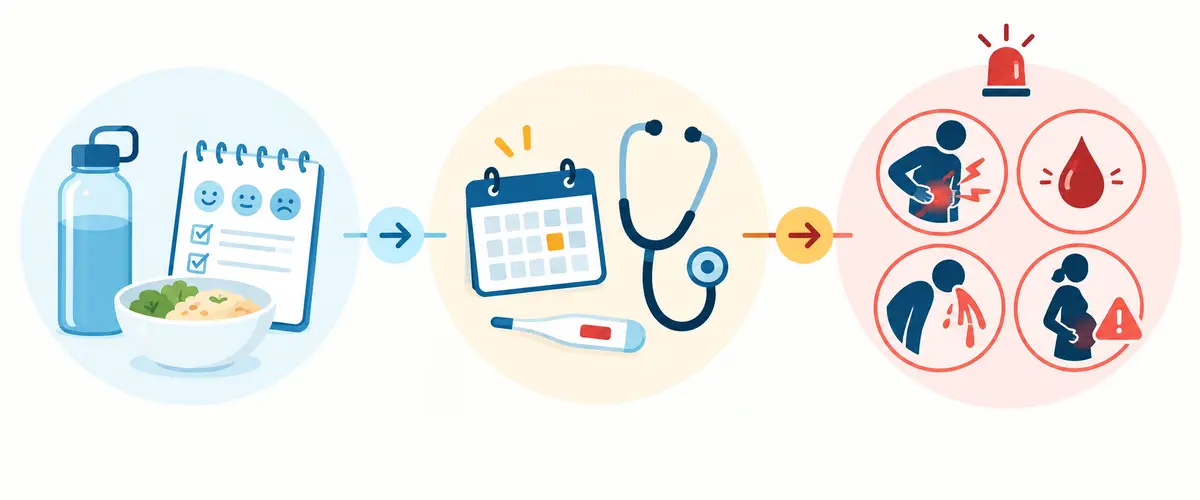
- Record where it hurts, when it began, whether it is constant or intermittent, how intense it is, and whether it changes with meals, movement, or bowel movements.
- Note fever, nausea, vomiting, diarrhea, constipation, bloating, urinary changes, bleeding, loss of appetite or weight, and the date of the last menstrual period when relevant.
- Report previous surgery, possible pregnancy, medicines, alcohol use, and digestive, urinary, kidney, or metabolic conditions.
- The cause cannot be confirmed online alone; the progression of symptoms and a medical examination may be necessary.
Prudent care for mild discomfort
- If the pain is mild and no warning signs are present, rest, take fluids in small amounts, and eat light portions as tolerated.
- Temporarily avoid alcohol, very fatty foods, and anything you clearly identify as a trigger.
- Keep a record of pain intensity, food, bowel movements, and other symptoms so you can describe the progression during a consultation.
- Before taking anti-inflammatory medicines, laxatives, antidiarrheals, or herbal remedies, confirm that they are safe for your situation.
When to arrange a medical consultation
- Arrange an assessment if the pain does not improve within 24 to 48 hours, becomes more frequent or intense, returns, or limits daily activities.
- Seek advice if there is fever, vomiting, persistent diarrhea, ongoing bloating, prolonged loss of appetite, burning when urinating, or frequent urination.
- Unexplained weight loss, nighttime pain, jaundice, or a persistent change in bowel movements also needs assessment.
- Infants, young children, older adults, pregnant people, and those with a weakened immune system or chronic conditions should seek advice earlier.
Symptoms requiring immediate attention
- Seek urgent care for sudden, very severe, or rapidly worsening pain, especially when the abdomen is hard, very tender, or swollen.
- Vomiting blood, black or bloody stools, fainting, confusion, marked pallor, or cold sweats are emergency warning signs.
- Persistent vomiting with inability to keep fluids down, no urine, or rapid deterioration requires immediate assessment.
- During pregnancy, severe pain, vaginal bleeding, dizziness, or fainting needs urgent care.
- Go to an emergency department if abdominal pain occurs with chest pain, breathing difficulty, a major injury, or inability to pass stool or gas with marked bloating.
Warning signs and when to seek care
- Sudden, very severe, or rapidly worsening pain
- A rigid, very tender, or markedly swollen abdomen
- Vomiting blood, black stools, or visible blood in the stool
- Fainting, confusion, cold sweats, marked pallor, or rapid deterioration
- Persistent vomiting with inability to drink or very little urine
- Pregnancy with severe pain, bleeding, dizziness, or fainting
What not to do
- Do not ignore sudden or severe pain, and do not drive if you are weak or at risk of fainting.
- Do not use anti-inflammatory medicines, laxatives, or antibiotics on your own to mask the symptom.
- Do not force food or fluids when vomiting is continuous or swallowing is difficult.
- Do not apply intense heat to abdominal pain of unknown cause.
- Do not wait for a WhatsApp reply when bleeding, fainting, a rigid abdomen, or another emergency warning sign is present.
Medical references
MedlinePlus — Abdominal pain MedlinePlus — Recognizing medical emergencies NHS — Stomach ache and warning signsIf you have symptoms, risk factors, or questions about your situation, arrange a professional medical assessment.
Book an appointment