
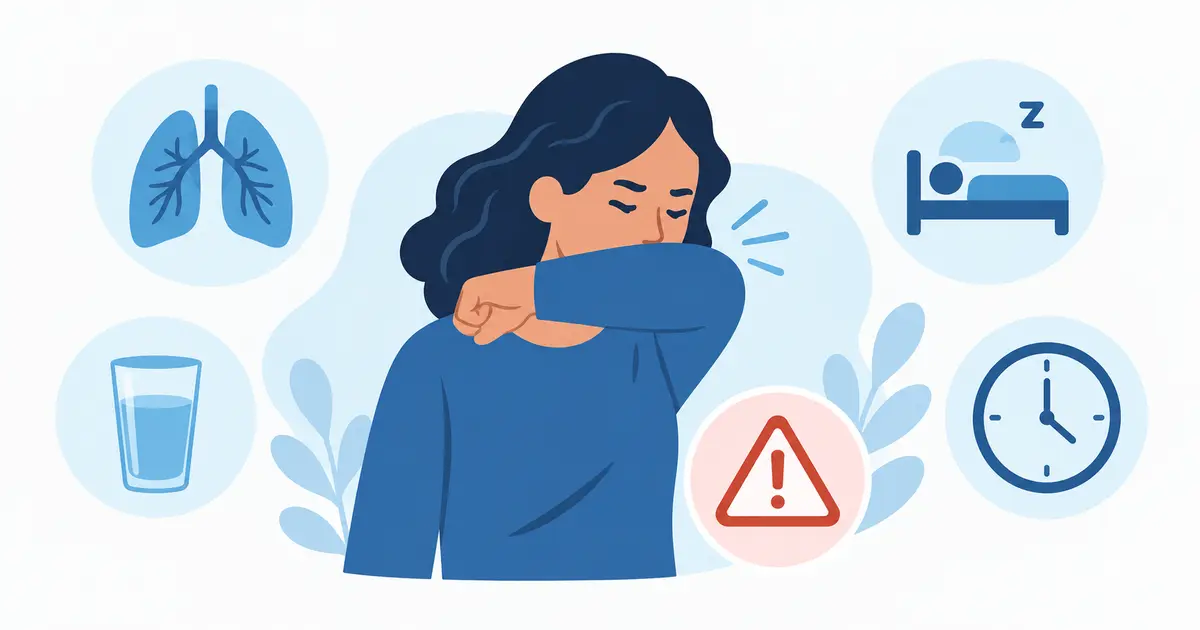
Key points
- ✓ Coughing helps clear and protect the airways, but it can have many different causes.
- ✓ Most recent coughs associated with viral infections improve without antibiotics.
- ✓ Difficulty breathing, bluish lips, coughing up blood, or severe chest pain needs immediate attention.
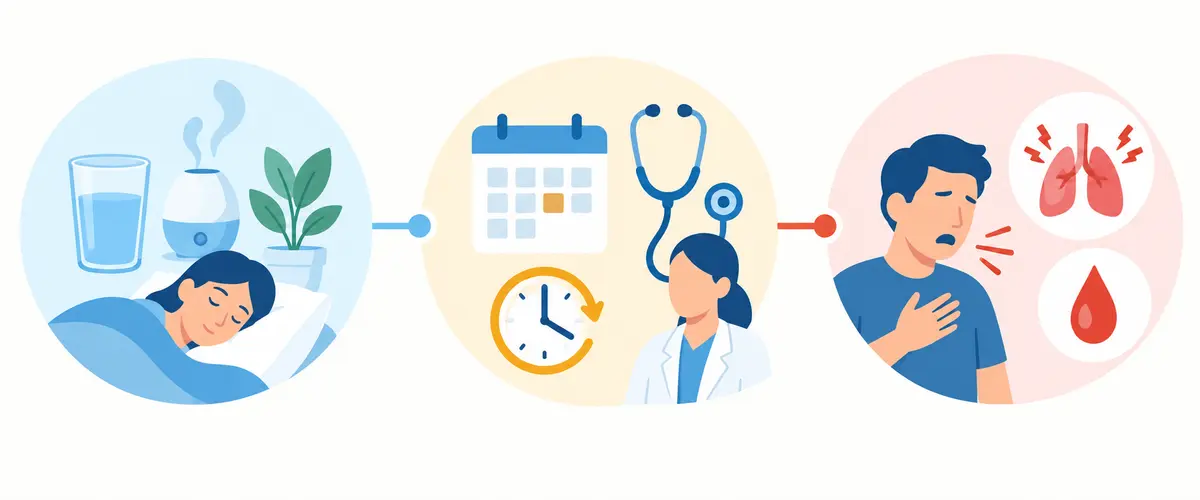
What to monitor
- Note when the cough began, whether it is dry or produces phlegm, whether it occurs at night or with exercise, and whether fever, wheezing, pain, or shortness of breath is present.
- Colds and other viral infections are common causes. Cough can also be related to allergies, asthma, reflux, smoke, pollution, certain medicines, or other illnesses.
- The color of phlegm alone cannot determine whether an infection is bacterial or whether an antibiotic is needed.
- Age, pregnancy, smoking, and a history of asthma, lung, heart, or kidney disease, or a weakened immune system affect how soon assessment may be needed.
Prudent self-care that may help
- Drink fluids regularly, rest, and avoid tobacco or vape smoke, dust, aerosols, and other irritants.
- Warm drinks may soothe the throat. For people older than one year, a small amount of honey may help with cough; never give honey to an infant younger than twelve months.
- If you use a humidifier, clean it according to the instructions to prevent microorganisms from building up.
- Before using cough syrups, decongestants, or combination cold medicines, check whether they are appropriate for your age, pregnancy, medical conditions, and other medicines.
When to arrange a medical consultation
- Arrange an assessment if the cough lasts more than three weeks, worsens, returns often, or disrupts sleep and daily activities.
- Seek advice sooner if there is persistent fever, wheezing, weight loss, night sweats, repeated vomiting with coughing, or pain when breathing.
- Young children, older adults, pregnant people, and those with heart, lung, or kidney disease, diabetes, or a weakened immune system may need earlier assessment.
- A healthcare professional will decide whether examination, testing, or treatment is needed; not everyone with a cough requires an X-ray or antibiotics.
Symptoms requiring immediate attention
- Seek emergency care if breathing is very difficult, the person cannot speak in full sentences, the lips appear blue, or there is a sensation of choking.
- Coughing up blood, severe or crushing chest pain, fainting, confusion, or rapid deterioration requires urgent attention.
- For a child, seek immediate help if the ribs pull in during breathing, there are pauses in breathing, the skin appears blue, or the child is very difficult to wake.
- Swelling of the lips, tongue, or throat together with breathing difficulty is an emergency.
Warning signs and when to seek care
- Severe breathing difficulty, very fast breathing, or inability to speak normally
- Bluish lips or face, marked pallor, or pauses in breathing
- Coughing up blood or severe, crushing chest pain
- Confusion, fainting, extreme drowsiness, or rapid deterioration
- In a child: ribs pulling in, grunting, or difficulty drinking
What not to do
- Do not use leftover antibiotics or take them without professional assessment.
- Do not give honey to an infant younger than twelve months.
- Do not combine multiple cold or cough products without checking their ingredients and contraindications.
- Do not expose the person to tobacco or vape smoke.
- Do not wait for a WhatsApp reply when breathing is difficult or another emergency warning sign is present.
Medical references
MedlinePlus — Tos MedlinePlus — General information about cough NHS — Cough and when to seek helpIf you have symptoms, risk factors, or questions about your situation, arrange a professional medical assessment.
Book an appointment