

Key points
- ✓ High blood pressure often causes no symptoms; measuring it is how it is detected.
- ✓ A diagnosis cannot be made from a single isolated reading.
- ✓ Prescribed treatment and healthy habits reduce the risk of heart attack, stroke, and kidney damage.
What high blood pressure means
- Blood pressure has two values: systolic, when the heart contracts, and diastolic, when it relaxes.
- A high reading can result from pain, stress, recent exercise, caffeine, tobacco, or incorrect measurement technique.
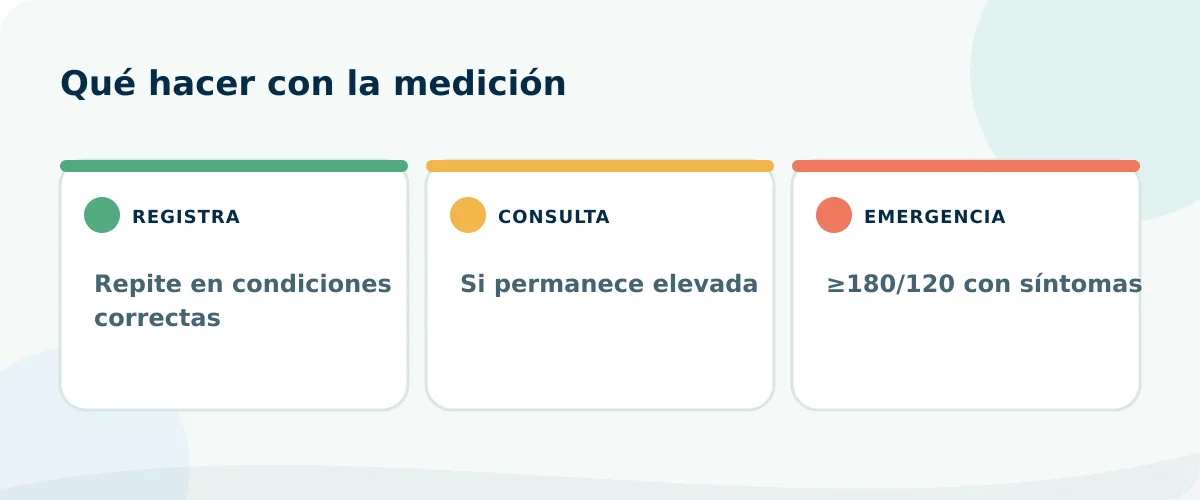
- If readings are repeatedly high, record the date, time, and symptoms, and arrange a medical assessment.
How to help manage it
- Take medicines exactly as prescribed and do not stop them even if you feel well.
- Reduce salt and highly processed foods, remain appropriately active, avoid smoking, and limit alcohol.
- Monitor weight, blood sugar, and cholesterol when appropriate, and attend scheduled follow-up appointments.
- For home measurements, rest for five minutes, support your back and feet, position your arm at heart level, and use the correct cuff size.
What to do with a very high reading
- If blood pressure is 180/120 mmHg or above, remain at rest and repeat the measurement after at least one minute.
- If it remains very high, seek immediate medical advice, even without symptoms.
- If chest pain, shortness of breath, weakness, confusion, trouble speaking, or visual changes are also present, seek emergency care immediately.
Warning signs and when to seek care
- Severe chest pain or pressure
- Difficulty breathing
- Weakness or numbness on one side of the body
- Confusion, fainting, or trouble speaking
- Sudden visual changes or severe headache
What not to do
- Do not double or add medication doses on your own.
- Do not stop treatment because one reading is normal.
- Do not use home remedies instead of medical assessment.
- Do not drive yourself if you have neurological symptoms or severe chest pain.
Medical references
WHO — High blood pressure PAHO/WHO — High blood pressureIf you have symptoms, risk factors, or questions about your situation, arrange a professional medical assessment.
Book an appointment