
Key points
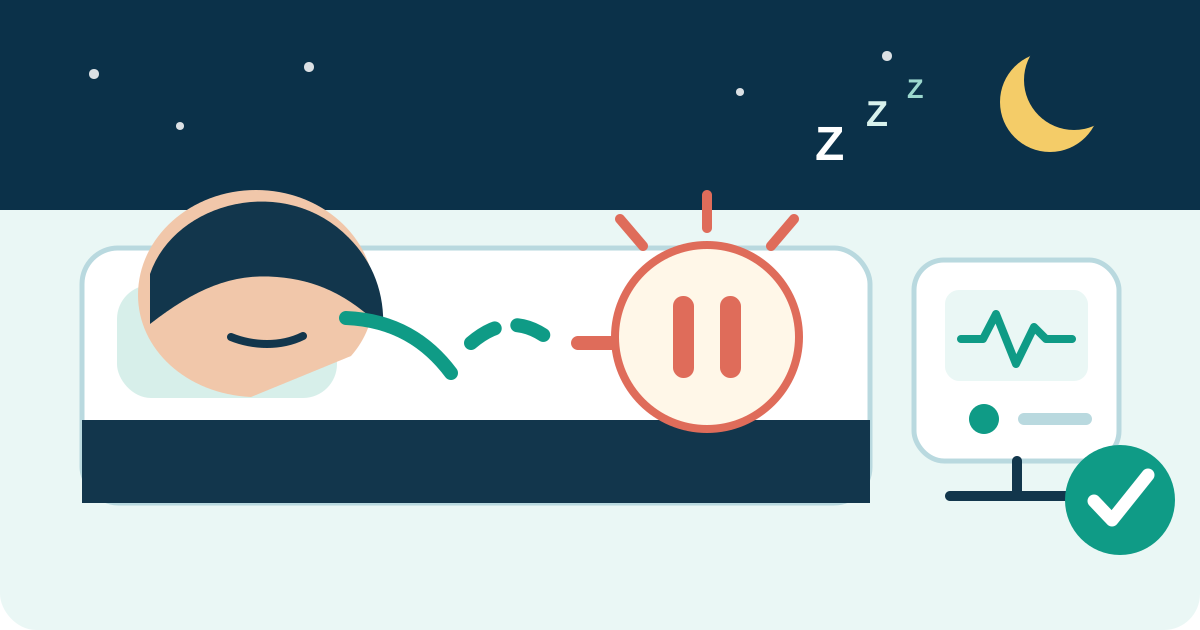
- ✓ Witnessed breathing pauses, gasping, and frequent loud snoring may suggest sleep apnea, but snoring alone does not confirm the diagnosis.
- ✓ Waking unrefreshed, morning headache, difficulty concentrating, and daytime sleepiness can also be signs.
- ✓ Medical assessment and, when appropriate, a sleep study can confirm the condition and guide suitable treatment.
Signs during the night and day
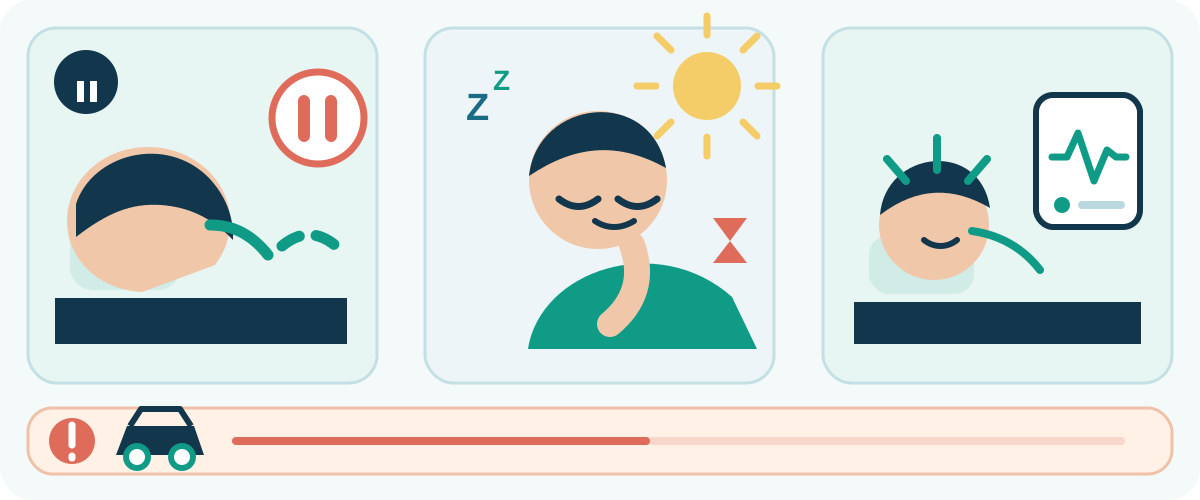
- During sleep there may be repeated pauses in breathing, loud snoring, snorting, or gasping. Another person is often the first to notice them.
- Frequent awakenings, unrefreshing sleep, a dry mouth, or a morning headache may also occur.
- During the day, people may experience fatigue, sleepiness, irritability, memory or concentration problems, and slower reactions.
- In children, sleep apnea may be associated with noisy breathing, restless sleep, hyperactivity, attention problems, or worsening asthma.
Why assessment matters
- Obstructive sleep apnea occurs when the upper airway repeatedly narrows or closes during sleep; less common types require a different assessment.
- Risk may increase with obesity, certain airway features, family history, age, and alcohol or sedating medicines. Enlarged tonsils or adenoids may contribute in children.
- Untreated sleep apnea can affect sleep quality, blood pressure, and cardiovascular health, and can increase the risk of accidents caused by sleepiness.
- Not everyone with sleep apnea has excess weight, and not everyone who snores has sleep apnea; the complete clinical history guides which tests are needed.
How it is assessed
- A clinician will review symptoms, medicines, medical history, risk factors, and observations from a bed partner when available.
- A record of sleep times, awakenings, snoring, and daytime sleepiness can help describe the problem.
- A sleep study, performed in a sleep center or at home depending on the situation, records breathing and other functions to confirm the type and severity.
- Watches, apps, and home oximeters may provide limited information, but they do not replace medical assessment or a professionally indicated sleep study.
When to arrange a consultation
- Seek assessment if someone notices breathing pauses, if you wake gasping, or if loud snoring occurs with persistent fatigue or daytime sleepiness.
- Also seek advice if you fall asleep unintentionally, struggle to remain alert while working or driving, or notice significant changes in memory, concentration, or mood.
- If you already use CPAP or another treatment, ask for review if symptoms persist, the equipment is difficult to tolerate, or your health has changed.
- Treatment choice depends on the type and severity of apnea, airway anatomy, other health conditions, and the person's preferences.
Warning signs and when to seek care
- Severe sleepiness or falling asleep while driving, operating machinery, or performing another hazardous task
- Severe breathing difficulty, bluish lips, or inability to speak normally
- Chest pain or pressure, fainting, sudden confusion, or weakness on one side of the body
- A child with prolonged breathing pauses, bluish color, marked effort to breathe, or difficulty waking
- Rapid deterioration, abnormal breathing while awake, or any situation that appears to be an emergency
What not to do
- Do not drive or perform hazardous tasks if you are severely sleepy; stop in a safe place and get help.
- Do not use alcohol, sedatives, or sleeping pills to try to correct the problem without professional advice.
- Do not use someone else's CPAP equipment or change prescribed pressure settings on your own.
- Do not rule out apnea simply because you do not have excess weight, or confirm it only from snoring, an app, or an oximeter.
Medical references
NHLBI/NIH — Sleep apnea symptoms NHLBI/NIH — Sleep apnea diagnosis MedlinePlus — Sleep apnea MedlinePlus — Sleep studyIf you have symptoms, risk factors, or questions about your situation, arrange a professional medical assessment.
Book an appointment