
Key points
- ✓ Antibiotics treat certain bacterial infections; they do not cure colds, influenza, or other viral infections.
- ✓ Unnecessary use can cause side effects and contribute to antimicrobial resistance.
- ✓ The antibiotic, dose, and duration depend on the diagnosis and each person's circumstances.
When antibiotics may be needed
- Some bacterial infections, including certain urinary tract infections, pneumonias, or streptococcal infections, may require antibiotics after professional assessment.
- Yellow or green mucus does not by itself prove a bacterial infection.
- Many sinus infections, ear infections, and episodes of bronchitis can improve without antibiotics; decisions depend on symptoms, duration, and examination findings.
- Before prescribing, clinicians consider allergies, pregnancy, age, kidney or liver function, other medications, and local resistance patterns.
How to use antibiotics correctly
- Take antibiotics only when prescribed for your current condition, following the exact dose, schedule, and duration.
- If you miss a dose, check the instructions or ask for advice; do not double the next dose on your own.
- Report rash, nausea, diarrhea, dizziness, or other side effects. Do not stop or extend treatment without professional guidance, except when a severe reaction requires immediate care.
- Ask your doctor or pharmacist about interactions and how to store and dispose of the medicine safely.
Understanding antimicrobial resistance
- Resistance occurs when microorganisms change and no longer respond to medicines; it does not mean a person's body becomes resistant.
- Unnecessary use, inappropriate antibiotic selection, and self-medication encourage resistant organisms to emerge and spread.
- Resistant infections can be harder to treat, require second-line medicines, and prolong hospitalization.
- Vaccination, handwashing, and infection prevention also reduce the need for antibiotics.
What to do with leftover medication
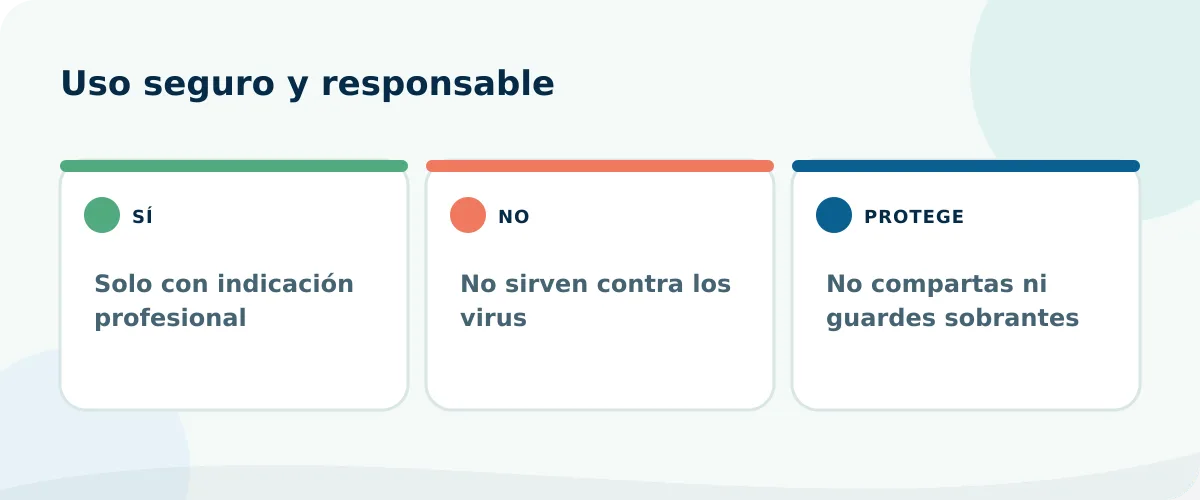
- Do not save antibiotics for a future illness or give them to someone else.
- Use medication take-back programs when available or ask a pharmacy about safe disposal.
- Keep medicines out of children's reach and store them according to the package instructions.
Warning signs and when to seek care
- Difficulty breathing or swelling of the lips, tongue, face, or throat after a dose
- Fainting, severe weakness, or a sensation that the throat is closing
- Widespread rash, blisters, or sores in the mouth or eyes
- Severe, persistent, or bloody diarrhea
- Rapid worsening, persistent fever, or inability to drink fluids
What not to do
- Do not take antibiotics for a cold, influenza, or another viral infection.
- Do not use leftover antibiotics or medication prescribed for someone else.
- Do not share antibiotics even when symptoms appear similar.
- Do not change the dose, shorten, or extend treatment on your own.
Medical references
WHO — Antimicrobial resistance CDC — Appropriate antibiotic useIf you have symptoms, risk factors, or questions about your situation, arrange a professional medical assessment.
Book an appointment