
Key points
- ✓ Thirst, dry mouth, dark urine, and urinating less than usual can indicate dehydration.
- ✓ Young children, older adults, and people with chronic illnesses can become dehydrated more quickly.
- ✓ Diarrhea, vomiting, fever, hot weather, and strenuous exercise increase water and salt loss.
How to recognize dehydration
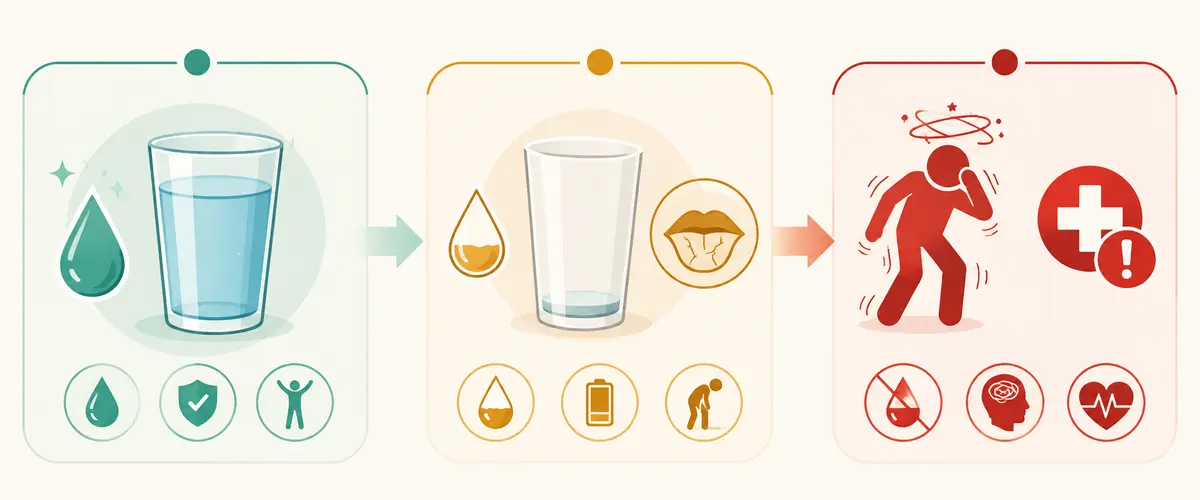
- Early signs may include thirst, dry mouth, tiredness, headache, dizziness, and reduced or darker urine.
- Infants and young children may also have fewer wet diapers, no tears, sunken eyes, irritability, or unusual drowsiness.
- Confusion, fainting, a very fast pulse or breathing rate, and no urine output may indicate severe dehydration.
How to prevent dehydration
- Drink fluids regularly and increase frequency during hot weather, physical activity, fever, diarrhea, or vomiting.
- Take breaks in the shade or cool environments and wear light clothing during heat exposure.
- Offer fluids frequently to children and older adults; do not wait for intense thirst.
- If you have heart failure, kidney disease, or another prescribed fluid restriction, follow your healthcare professional's plan.
Safe rehydration at home
- For fluid losses from diarrhea or vomiting, use an oral rehydration solution mixed exactly according to the package instructions.
- If nausea is present, offer small, frequent sips and gradually increase the amount if tolerated.
- Continue breastfeeding and usual food as tolerated unless a healthcare professional advises otherwise.
- Seek assessment if fluids cannot be kept down, losses continue, or the person does not improve.
People who need closer monitoring
- Infants, young children, older adults, pregnant people, and those with diabetes, kidney disease, or heart disease may need earlier assessment.
- Some medicines, including diuretics, can alter fluid balance; do not stop them without medical advice.
- During illness, record tolerated fluid intake, the frequency of vomiting or diarrhea, and urine output.
Warning signs and when to seek care
- Confusion, fainting, seizures, or difficulty waking
- Inability to drink or persistent vomiting that prevents keeping fluids down
- Very little urine or no urine for several hours
- Very rapid breathing or pulse, severe weakness, or rapid deterioration
- In a child: marked drowsiness, sunken eyes, no tears, or very few wet diapers
What not to do
- Do not wait for intense thirst in young children or older adults.
- Do not prepare homemade solutions with improvised amounts of salt or sugar.
- Do not use energy drinks, alcohol, or very sugary soft drinks to treat dehydration.
- Do not force an unconscious, very drowsy, or swallowing-impaired person to drink.
Medical references
MedlinePlus — Dehydration WHO — Diarrheal disease and oral rehydration MedlinePlus — Emergencias por el calorIf you have symptoms, risk factors, or questions about your situation, arrange a professional medical assessment.
Book an appointment