
Key points
- ✓ Diabetes can progress for years with mild symptoms or no obvious warning signs.
- ✓ Blood sugar targets must be individualized according to diabetes type, treatment, age, and overall health.
- ✓ Healthy eating, physical activity, prescribed medication, and regular checkups help prevent complications.
Symptoms that should be assessed
- Intense thirst, frequent urination, fatigue, blurred vision, persistent hunger, or unexplained weight loss can be associated with high blood sugar.
- Slow-healing wounds, frequent infections, or tingling in the feet also require assessment, especially when risk factors are present.
- These symptoms alone do not confirm diabetes. Diagnosis requires laboratory tests interpreted by a healthcare professional.
Safe day-to-day management
- Take medication or insulin exactly as prescribed and record measurements when your healthcare team recommends it.
- Keep regular mealtimes, prioritize water, vegetables, high-fiber foods, and appropriate portions, and avoid tobacco.
- Choose physical activity suited to your condition and understand how it may affect blood sugar, especially if you use insulin or other medicines that can cause low blood sugar.
- Monitor blood pressure, kidney function, eye health, and foot health according to your individualized care plan.
Recognizing and treating low blood sugar
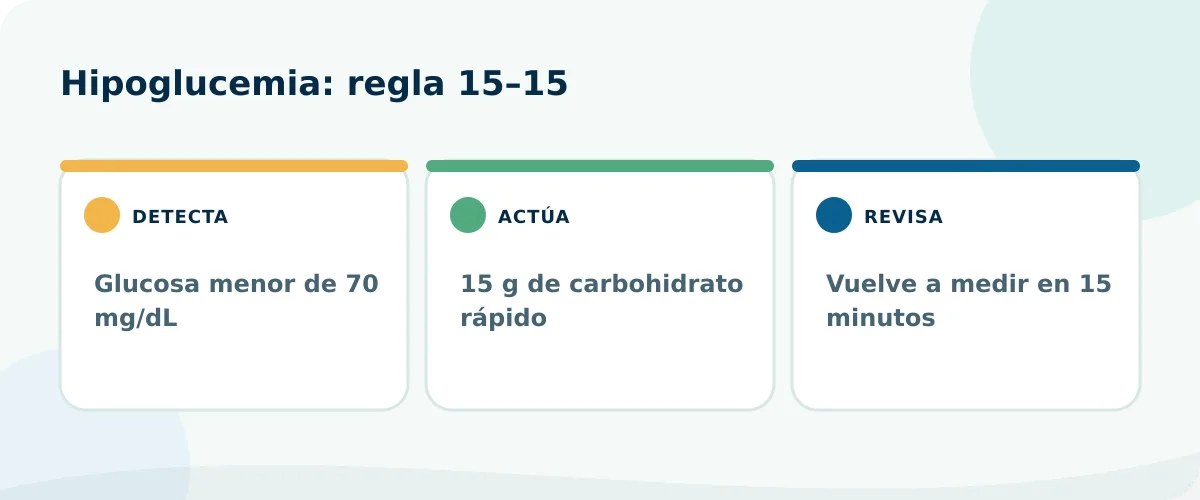
- A blood sugar level below 70 mg/dL is considered low. It may cause shaking, sweating, hunger, palpitations, dizziness, irritability, or confusion.
- If the person is conscious and can swallow, use the 15-15 rule: consume 15 grams of fast-acting carbohydrate, wait 15 minutes, and check again.
- If the reading remains below 70 mg/dL, repeat the process. After recovery, follow the care plan and report repeated episodes to the healthcare team.
- The appropriate amount may differ for young children. Follow the child's healthcare professional's instructions.
Very high blood sugar and illness
- Fever, infections, stress, vomiting, or missed doses can raise blood sugar and require more frequent monitoring.
- People who have been advised to test ketones should follow their sick-day plan and seek advice if moderate or high levels appear.
- Persistent vomiting, difficult or deep breathing, abdominal pain, drowsiness, or fruity-smelling breath may indicate a metabolic emergency.
Warning signs and when to seek care
- Loss of consciousness, seizures, or inability to swallow
- Severe confusion or unusual behavior that does not improve
- Persistent vomiting with inability to keep fluids down
- Difficult or deep breathing, abdominal pain, or fruity-smelling breath
- Weakness on one side of the body, chest pain, or rapid deterioration
What not to do
- Do not give food or drink to an unconscious person or someone who cannot swallow.
- Do not double insulin or medication doses on your own to correct a high reading.
- Do not stop treatment because blood sugar returns to normal.
- Do not use supplements or home remedies in place of prescribed treatment.
Medical references
WHO — Diabetes PAHO/WHO — Diabetes CDC — Treatment of low blood sugar CDC — Diabetic ketoacidosisIf you have symptoms, risk factors, or questions about your situation, arrange a professional medical assessment.
Book an appointment