
Key points
- ✓ Fever is a symptom.
- ✓ Hydration and overall condition matter.
- ✓ Antibiotics should not be used without medical assessment.
General care
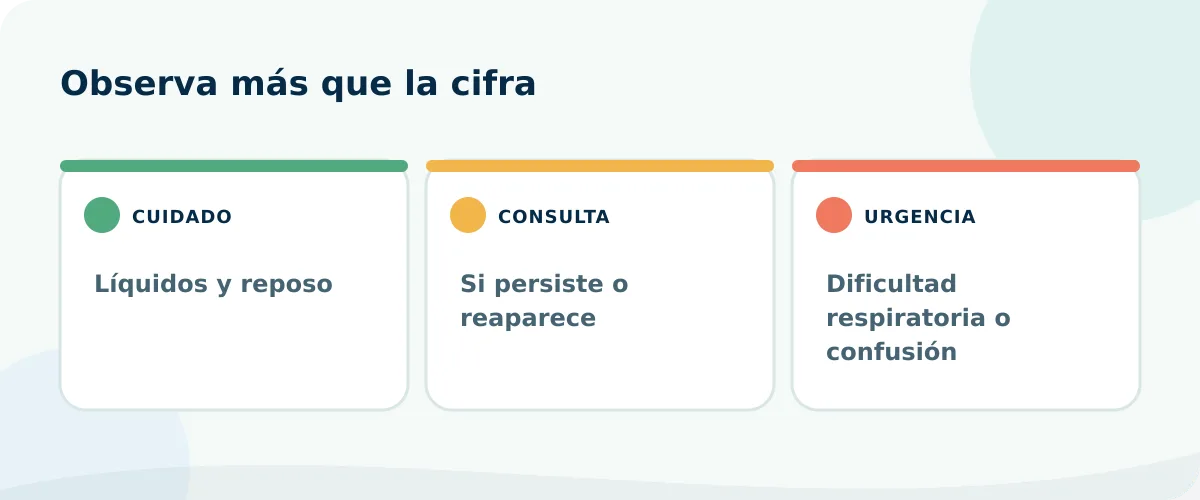
- Confirm the temperature with a thermometer, rest, drink fluids frequently, and wear light clothing.
- Fever medicines are used for discomfort and should follow the package instructions or a clinician's recommended dose.
- An infant younger than three months with a temperature of 38 °C or higher needs immediate medical assessment.
When to seek medical advice
- Seek medical advice if fever lasts longer than 48 to 72 hours, returns after improvement, or occurs with localized pain, persistent cough, burning during urination, or a rash.
- Seek early assessment during pregnancy, immunosuppression, kidney, heart, or lung disease, and in frail older adults.
Warning signs and when to seek care
- Difficulty breathing
- Confusion or extreme drowsiness
- Neck stiffness or seizures
- Persistent vomiting
- Bleeding or rapid deterioration
What not to do
- Do not use ice-cold baths or rubbing alcohol on the skin.
- Do not give aspirin to children.
- Do not take antibiotics without medical guidance.
Related guides
Headache: self-care and warning signsMedical references
MedlinePlus — Fever CDC — Influenza signs and symptomsIf you have symptoms, risk factors, or questions about your situation, arrange a professional medical assessment.
Book an appointment