
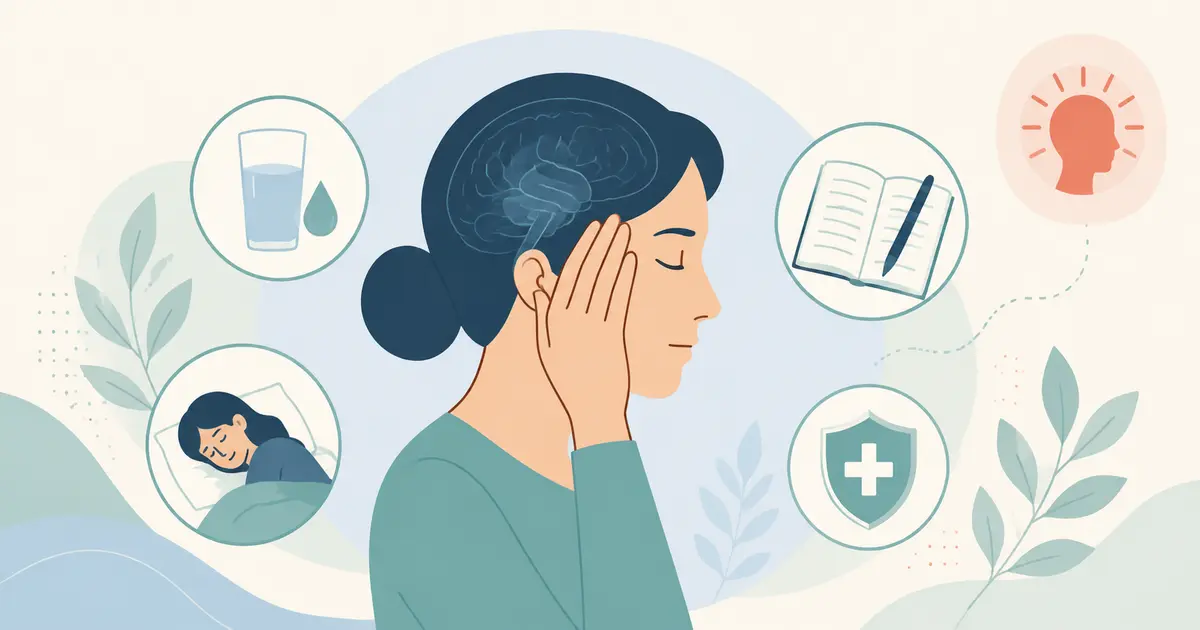
Key points
- ✓ A headache is a symptom; its pattern, duration, and accompanying symptoms help guide the assessment.
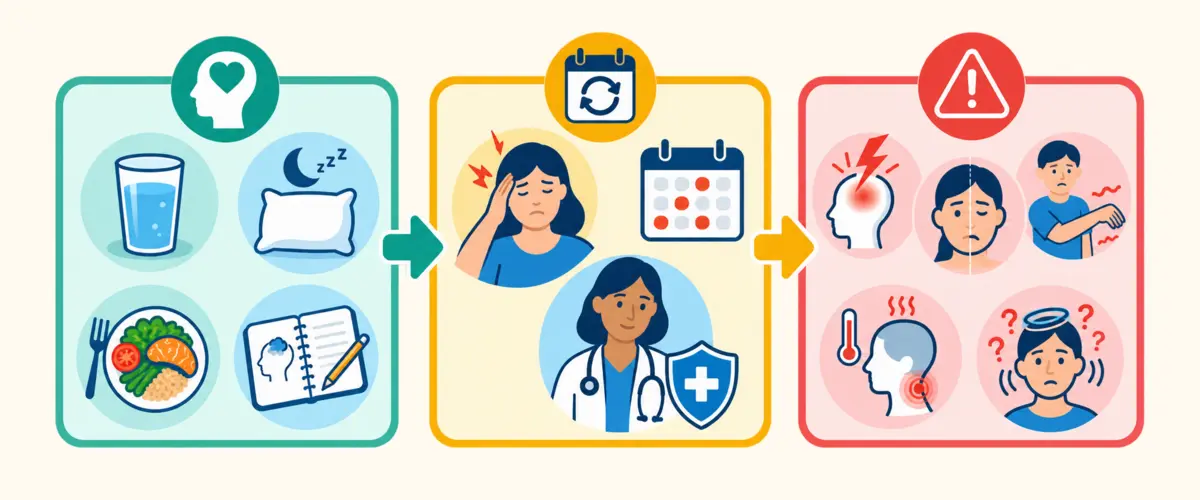
- ✓ Regular sleep, hydration, meals, and a symptom diary may help identify triggers.
- ✓ A sudden, extremely severe headache or one accompanied by weakness, speech difficulty, confusion, or seizures needs immediate attention.
What can cause a headache
- Tension-type headache and migraine are common. Headache may also occur with insufficient sleep, stress, dehydration, missed meals, infections, or eye strain.
- Migraine may cause throbbing pain, nausea, and sensitivity to light or sound; some people experience visual or sensory symptoms called aura.
- A secondary headache may be related to another illness, an injury, or certain medicines. Pain intensity alone cannot establish the cause.
- A healthcare professional should assess the symptoms, history, examination, and progression before deciding whether tests are needed.
Prudent self-care that may help
- Rest in a quiet environment, drink fluids, and try to maintain regular sleep and meal times.
- Temporarily reduce bright light, noise, or screen time if these clearly worsen the symptoms.
- A cool or warm pack may help some people. Do not place it directly on the skin, and use it for short periods.
- Before using pain relievers or anti-inflammatory medicines, confirm that they are appropriate for you, especially if you are pregnant, have kidney disease, gastritis, an ulcer, high blood pressure, allergies, or use blood thinners.
- Frequent use of headache medicines can maintain or worsen headaches. Do not increase the dose or combine products on your own.
What to record
- Write down when it started, how long it lasted, where it hurt, its intensity, and whether it felt pressing, throbbing, or different from previous episodes.
- Record nausea, fever, visual changes, light sensitivity, weakness, tingling, and any other accompanying symptoms.
- Include sleep, meals, hydration, menstruation, stress, physical activity, and medicines used.
- This record may help during a consultation, but it must not delay care when warning signs are present.
When to arrange a medical consultation
- Request an assessment if headaches recur, change pattern, become more frequent or intense, interrupt activities, or require frequent medication.
- Seek prompt advice for a new headache during pregnancy or after childbirth, especially when severe or accompanied by blurred vision, swelling, or high blood pressure.
- Earlier assessment is also appropriate when a new headache first appears after age 50 or when there is cancer, a weakened immune system, or another significant illness.
- A painful red eye with blurred vision or loss of vision needs urgent assessment.
Symptoms requiring immediate attention
- Go to an emergency department for a headache that starts suddenly and reaches extreme intensity within seconds or a few minutes.
- Seek immediate care when headache occurs with one-sided weakness or numbness, facial drooping, speech difficulty, vision loss, confusion, fainting, or seizures.
- Fever with a stiff neck, marked drowsiness, persistent vomiting, or a concerning rash also requires urgent assessment.
- A severe headache after a head injury, especially with vomiting, loss of consciousness, or a change in behavior, should not be monitored only at home.
Warning signs and when to seek care
- A sudden, explosive headache or the worst headache of your life
- Weakness, numbness, facial drooping, or difficulty speaking
- Confusion, fainting, seizures, or difficulty waking
- Fever with a stiff neck, rapid deterioration, or a concerning rash
- Severe headache after a head injury
- Pregnancy or postpartum with severe headache, visual changes, or high blood pressure
What not to do
- Do not ignore a sudden, extremely severe headache or neurological symptoms.
- Do not increase doses, combine pain relievers, or use another person's medication.
- Do not use pain relievers repeatedly for weeks without advice, because they may perpetuate headache.
- Do not drive if you have altered vision, weakness, confusion, or risk of fainting.
- Do not wait for a WhatsApp reply when emergency warning signs are present.
Related guides
Fever: when to pay attentionMedical references
WHO — Migraine and other headache disorders MedlinePlus — Headache NHS — Headaches and warning signsIf you have symptoms, risk factors, or questions about your situation, arrange a professional medical assessment.
Book an appointment