
Key points
- ✓ Kidney disease may progress without symptoms.
- ✓ Managing blood pressure and diabetes helps protect the kidneys.
- ✓ Some pain medicines and supplements may harm them.
Protective habits
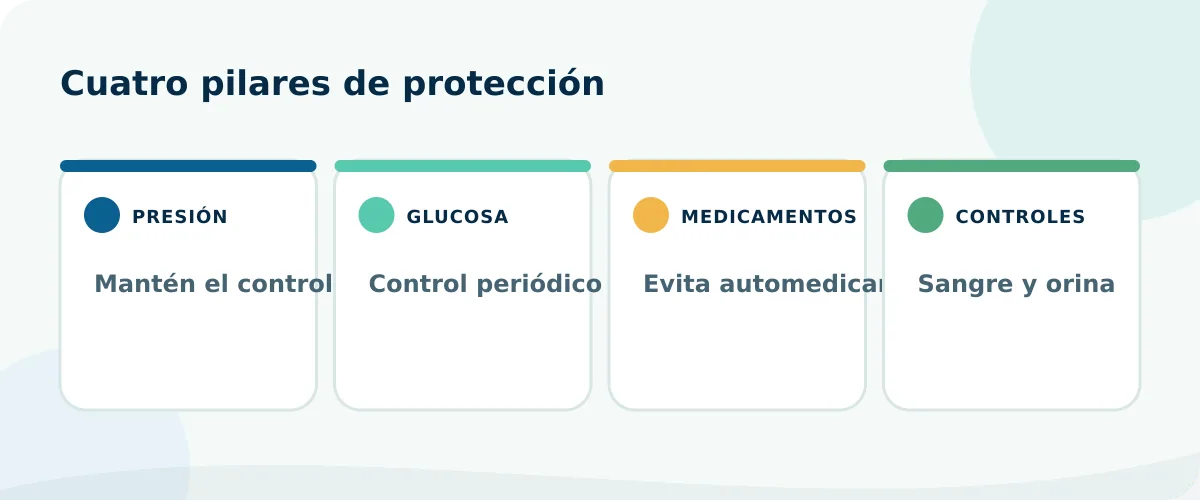
- Manage blood pressure and blood sugar, maintain a healthy weight, stay physically active, avoid smoking, and limit salt.
- Drink fluids according to thirst and medical advice. Excessive water intake does not cleanse the kidneys.
- Do not stop or change prescribed medication without medical advice.
Medicines and health checks
- Avoid frequently taking anti-inflammatory medicines such as ibuprofen, naproxen, or diclofenac without supervision.
- Tell your doctor about herbal products, supplements, and detox products.
- Key tests include blood creatinine with estimated kidney filtration and a urine albumin-to-creatinine ratio.
Warning signs and when to seek care
- Very little or no urine
- Visible blood in the urine
- Worsening swelling
- Shortness of breath
- Persistent vomiting or confusion
What not to do
- Do not wait for pain before getting checked.
- Do not take supplements without checking their kidney safety.
- Do not change a medically prescribed fluid allowance.
Medical references
National Kidney Foundation — Chronic kidney disease National Kidney Foundation — Safe medication useIf you have symptoms, risk factors, or questions about your situation, arrange a professional medical assessment.
Book an appointment