
Key points
- ✓ Values vary with age, activity, altitude, and some medical conditions.
- ✓ A single measurement does not confirm a diagnosis.
- ✓ Symptoms and changes over time matter as much as the number.
Blood pressure
- Blood pressure is expressed as two numbers: systolic, when the heart contracts, and diastolic, when it relaxes.
- In adults, a reading below 120/80 mmHg is generally considered normal; repeatedly elevated readings require medical assessment.
- A reading above 180 and/or 120 mmHg should be repeated after one minute. If accompanied by chest pain, shortness of breath, weakness, confusion, or vision changes, seek emergency care.
Pulse and breathing
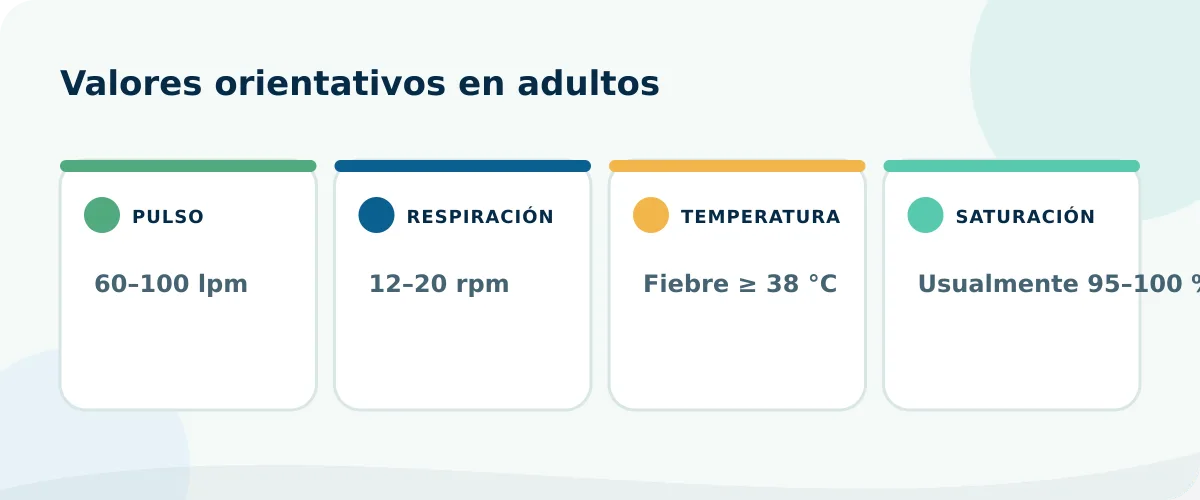
- For many adults, a resting pulse ranges from 60 to 100 beats per minute.
- A typical adult resting respiratory rate is 12 to 20 breaths per minute.
- Seek medical advice if your pulse remains irregular, very fast, or very slow, especially with dizziness, fainting, or shortness of breath.
Temperature and oxygen
- In general, 38 °C or above is considered a fever; readings vary depending on where temperature is measured.
- At low altitude, oxygen saturation is usually between 95% and 100%. It may be lower at high altitude or in people with lung disease.
- A new or repeated drop to 92% or below requires prompt assessment; 90% or below, or difficulty breathing, is an emergency.
Warning signs and when to seek care
- Chest pain
- Difficulty breathing
- Fainting or confusion
- Weakness on one side of the body
- Bluish lips
What not to do
- Do not change your medication based on a single reading.
- Do not ignore serious symptoms even if a number appears normal.
Medical references
MedlinePlus — Vital signs American Heart Association — Blood pressureIf you have symptoms, risk factors, or questions about your situation, arrange a professional medical assessment.
Book an appointment