
Key points
- ✓ Preventive checks are tailored to age, medical history, habits, symptoms, and previous results.
- ✓ Blood pressure, weight, and selected glucose or cardiovascular risk tests may be considered when appropriate.
- ✓ A checkup does not replace immediate care for serious symptoms or rapid deterioration.
What a preventive checkup is for
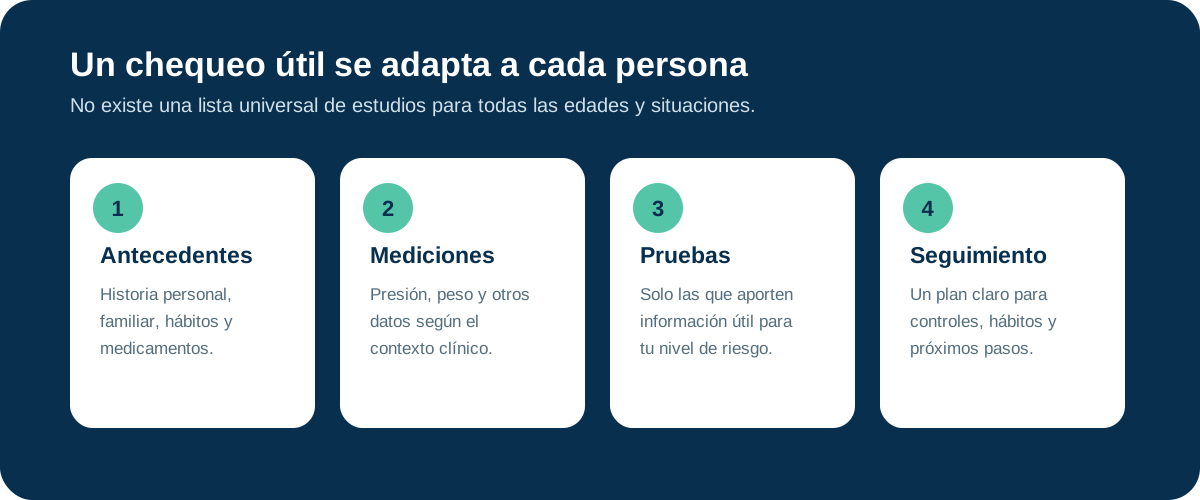
- It is an opportunity to review personal and family history, vaccines, habits, medicines, and recent health changes.
- It may identify risk factors before symptoms develop and help determine which checks are useful for the individual.
- It does not mean ordering every available test: each test should address a specific need and consider benefits, limits, and possible false results.
- Frequency is not the same for everyone and may change with age, pregnancy, previous conditions, treatment, and earlier results.
Information worth reviewing
- A family history of high blood pressure, diabetes, cardiovascular disease, kidney disease, cancer, or other significant conditions.
- Blood pressure, weight trends, tobacco or alcohol use, physical activity, diet, and sleep quality.
- Medicines, supplements, allergies, vaccines, previous tests, and home records when available.
- New symptoms, persistent changes, and concerns that may require a more focused assessment.
Checks that may be considered
- Correct blood pressure measurement is part of adult prevention; an elevated reading usually needs confirmation and clinical context.
- Blood glucose, cholesterol, kidney function, and other tests depend on individual risk and should not be used as a universal checklist.
- Recommended care may also include vaccines and specific screening tests according to age, sex, history, and shared decisions.
- When a result is abnormal, the next step considers symptoms, the laboratory reference range, medicines, and changes over time rather than one number alone.
When to arrange an assessment
- If you have not had recent preventive care or do not know which checks apply to you, a consultation can help organize an individualized plan.
- Earlier review is appropriate for significant family history, repeatedly elevated blood pressure, unexplained weight changes, or cardiovascular, metabolic, or kidney risk factors.
- It is also appropriate to discuss new symptoms, medication side effects, or previous results that still need interpretation.
- Bring a list of medicines and supplements, relevant family history, and previous test reports to avoid unnecessary repetition.
Warning signs and when to seek care
- Severe or crushing chest pain, especially with cold sweats, nausea, or spreading pain
- Marked breathing difficulty, bluish lips, or inability to speak normally
- One-sided weakness, facial drooping, speech difficulty, confusion, or fainting
- Very high blood pressure with neurological symptoms, chest pain, or shortness of breath
- Major bleeding, rapid deterioration, or any symptom that appears to be an emergency
What not to do
- Do not order tests indiscriminately or assume that more testing always means better prevention.
- Do not interpret an out-of-range result without checking the units, laboratory reference range, and clinical context.
- Do not stop or change medicines on your own before a checkup.
- Do not wait for a preventive appointment if warning signs or rapid deterioration are present.
Related guides
How to measure vital signs correctlyMedical references
MyHealthfinder — Screening tests and preventive care CDC — Family health history USPSTF — Hypertension screening in adultsIf you have symptoms, risk factors, or questions about your situation, arrange a professional medical assessment.
Book an appointment