
Key points
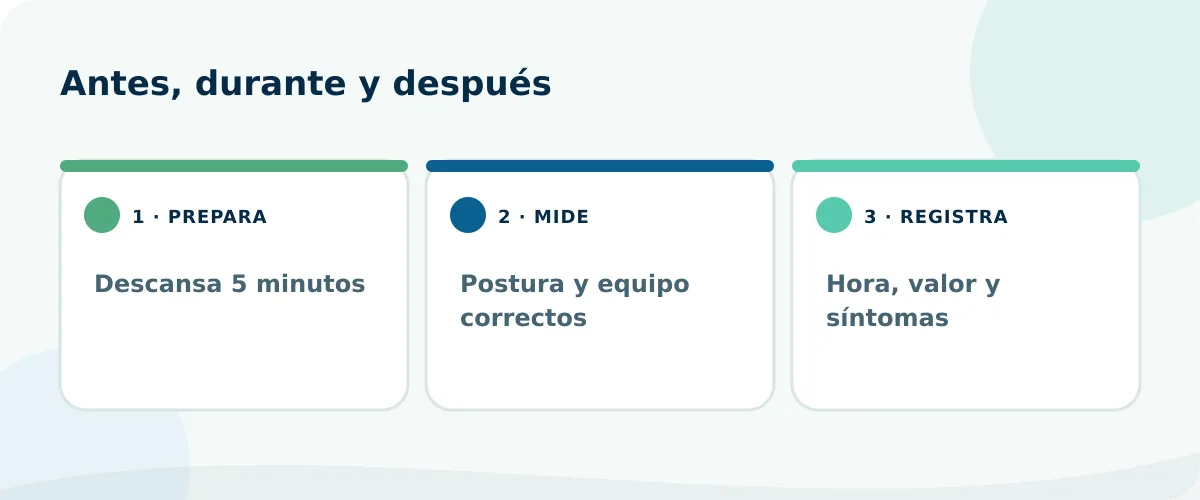
- ✓ Rest before taking a measurement.
- ✓ Use properly functioning equipment.
- ✓ Record the date, time, reading, and any symptoms.
Blood pressure
- Avoid exercise, tobacco, and caffeine for 30 minutes beforehand; empty your bladder and rest seated for at least five minutes.
- Support your back, keep your feet flat on the floor, do not cross your legs, and rest your arm at heart level.
- Place a correctly sized upper-arm cuff against bare skin. Take two measurements one minute apart.
Pulse and breathing
- To check your pulse, place your index and middle fingers on your wrist and count for 60 seconds if the rhythm is irregular.
- To check breathing, remain at rest and count how many times the chest rises during one minute.
- Note fever, pain, anxiety, recent exercise, or medications that may affect the reading.
Temperature and pulse oximeter
- Use the same measurement method when comparing temperatures and clean the thermometer as directed.
- When using a pulse oximeter, rest, warm your hand, remove nail polish, and wait for the reading to stabilize.
- Movement, poor circulation, nail polish, and low-quality devices can cause inaccurate readings.
Warning signs and when to seek care
- A very abnormal reading together with chest pain
- Shortness of breath
- Fainting
- Confusion
- Bluish skin or lips
What not to do
- Do not measure blood pressure over clothing.
- Do not adjust treatment on your own.
- Do not rely on an unstable reading.
Medical references
American Heart Association — Home monitoring MedlinePlus — PulseIf you have symptoms, risk factors, or questions about your situation, arrange a professional medical assessment.
Book an appointment